Carbide End Mills for Stainless Steel
Choose solid carbide end mills for stainless steel machining by grade, cutting operation and tool geometry. Compare square, corner radius and ball nose families across HMP, HMM, HMT and HMV series.
Select Stainless Steel End Mills by Cutter Geometry
Begin with the required part feature: 4E square for flat-bottom features, 4R corner radius where an R corner is allowed, or 2B ball nose for 3D contours. Then select a material-compatible tool series and confirm dimensions.

Square End Mills
A flat-ended cutter is an option for slots, planar features and square-shoulder milling. Select diameter and length against chip evacuation needs.
Explore Square End Mills →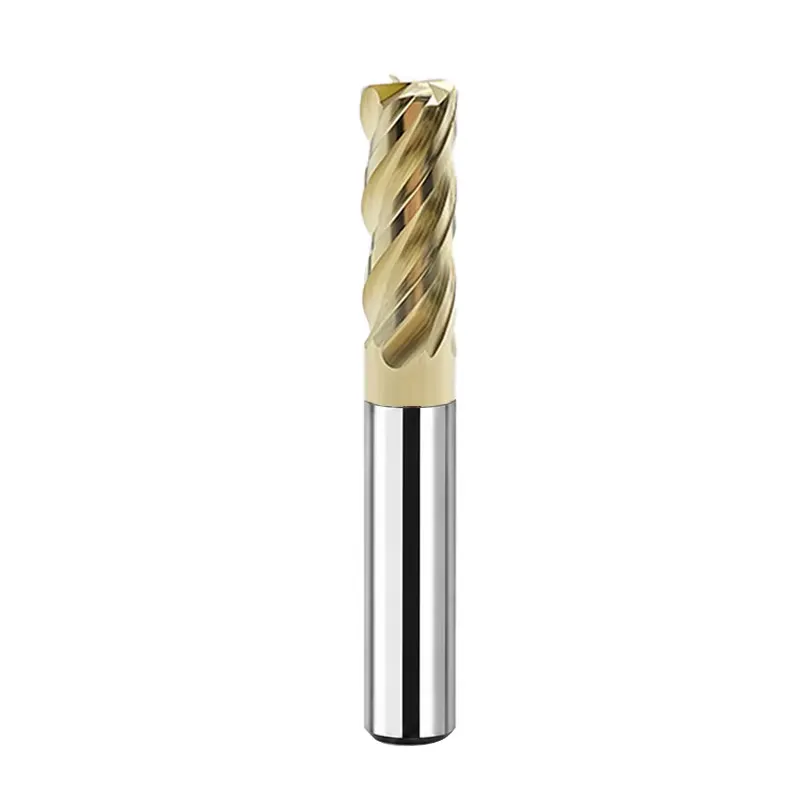
Corner Radius End Mills
A radiused corner can reduce cutting-corner vulnerability when the part drawing permits an R corner. Confirm the specified radius.
Explore Corner Radius End Mills →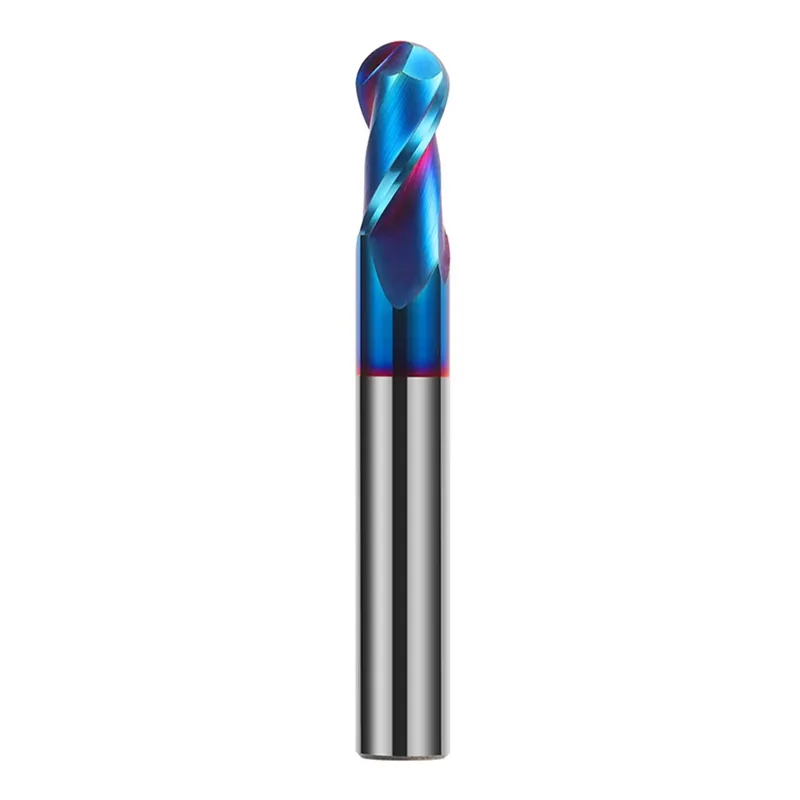
Ball Nose End Mills
A rounded end follows 3D contours and freeform surfaces. Compare tool reach, ball radius and finishing conditions.
Explore Ball Nose End Mills →Compare Stainless Steel End Mill Series
Compare four catalog-listed tool families before choosing a standard model. The series positioning is a starting point, not a guarantee for every stainless grade or heat-treatment condition.
| Series | Product Positioning | Available End Shapes | How to Choose |
|---|---|---|---|
| HMP | High-performance steel / stainless steel | 4E · 4R · 2B | Start here for a high-performance steel/stainless family; confirm grade, cutting method and dimensions. |
| HMM | General-purpose machiningCarbon steel, alloy steel, stainless steel, cast iron and hardened steel below HRC 40 | 4E · 4R · 2B | Start here when one general-purpose range must cover several listed materials; verify grade and hardness. |
| HMT | High-efficiency stainless steel / titanium | 4E · 4R · 2B | Start here when selecting a stainless/titanium-focused high-efficiency series; review the actual operation and toolpath. |
| HMV | High-efficiency steel / stainless steel | 4E · 4R · 2B | Start here for efficient steel/stainless milling; compare diameter, reach and engagement. |
All four series include 4E, 4R and 2B model families. Compare the 12 catalog model families →
Explore Stainless Steel End Mill Families
Find the 4E square, 4R corner radius or 2B ball nose family within HMP, HMM, HMT and HMV. Choose the geometry and series first, then request the exact diameter, radius and length combination.
HMP-4E
Square-end geometry for flat-bottom features and walls. Check chip clearance and cutting engagement before selecting a stainless milling strategy.
HMP-4R
Corner-radius geometry for side milling and semi-finishing when the part permits a radiused cutting corner. Confirm the specified R value.
HMP-2B
Ball-nose geometry for curved profiles and 3D finishing. Confirm ball radius, toolpath contact conditions and effective reach.
HMM-4E
Square-end geometry for flat-bottom features and walls. Check chip clearance and cutting engagement before selecting a stainless milling strategy.
HMM-4R
Corner-radius geometry for side milling and semi-finishing when the part permits a radiused cutting corner. Confirm the specified R value.
HMM-2B
Ball-nose geometry for curved profiles and 3D finishing. Confirm ball radius, toolpath contact conditions and effective reach.
HMT-4E
Square-end geometry for flat-bottom features and walls. Check chip clearance and cutting engagement before selecting a stainless milling strategy.
HMT-4R
Corner-radius geometry for side milling and semi-finishing when the part permits a radiused cutting corner. Confirm the specified R value.
HMT-2B
Ball-nose geometry for curved profiles and 3D finishing. Confirm ball radius, toolpath contact conditions and effective reach.
HMV-4E
Square-end geometry for flat-bottom features and walls. Check chip clearance and cutting engagement before selecting a stainless milling strategy.
HMV-4R
Corner-radius geometry for side milling and semi-finishing when the part permits a radiused cutting corner. Confirm the specified R value.
HMV-2B
Ball-nose geometry for curved profiles and 3D finishing. Confirm ball radius, toolpath contact conditions and effective reach.
Match the Cutter to Your Stainless Steel Operation
Match your selected 4E, 4R or 2B family to the actual cutting operation and specify the engagement and toolpath in your quotation request.
Flat-Bottom Slotting and Pocket Milling
Start from a 4E square geometry. Confirm whether full-width slotting leaves enough chip clearance; adjust toolpath and engagement accordingly.
Compare Square End Mills →Side Milling and Corner Radius Features
Review 4E for square shoulders or 4R where a radiused internal corner is permitted. Consider edge load, corner wear and workholding rigidity.
Compare Corner Radius Tools →Curved Surfaces and Finishing
For three-dimensional profiles, compare the 2B ball nose families. Ball radius, toolpath, finishing allowance and tool reach matter.
Compare Ball Nose End Mills →Specify the Stainless Grade Before Selecting a Tool
Use the stainless grade and condition to refine the selected model family. Material group names alone are not enough to select a coating, tool size or cutting data.
Control rubbing, heat and chip formation; provide the exact grade and machining operation.
Review tool edge strength, coolant and stable engagement for tougher cutting conditions.
Hardness and heat-treatment condition can change cutting behavior; provide condition and actual hardness.
Specify heat treatment or duplex grade. Tool suitability must be reviewed against hardness and cutting load.
Confirm Diameter, Cutting Length, Radius and Tool Reach
Confirm actual dimensions before ordering or requesting a quotation. Length variations do not automatically mean longer cutting edges or greater usable reach.
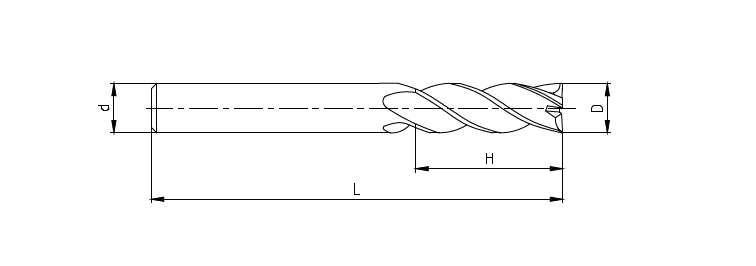
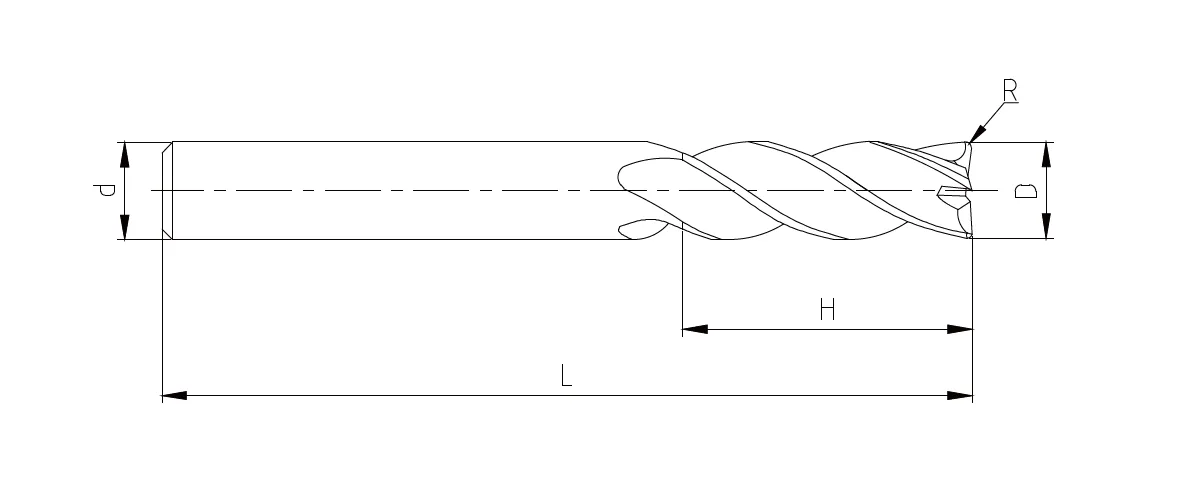
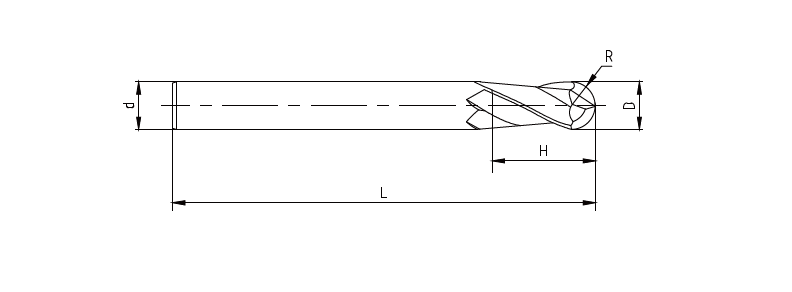
Dimensions to Include in Your RFQ
Practical Stainless Steel Milling Considerations
After selecting a tool family and dimensions, review three common risks with your machining team.
Work Hardening & Rubbing
Avoid excessive rubbing and dwell in work-hardening grades; review tool engagement and chip thickness.
Heat & Tool Wear
Confirm the actual grade, coolant use, and coating requirements instead of selecting by flute count alone.
Chip Evacuation & Vibration
Check chip clearance, holder rigidity and tool overhang, particularly in deep slots or long-reach cuts.
Request Stainless Steel End Mill Pricing & Specifications
Send your grade, operation and required dimensions so the appropriate stainless-compatible family can be reviewed.
- Stainless steel grade and hardness or heat-treatment condition
- 4E, 4R or 2B family, if known
- Cutting diameter D, shank d, cutting length H and overall length L
- R value if applicable; quantity, toolpath and drawing if available
Request Pricing & Specifications
Include the stainless grade, machining details and quantity when available.