Long Reach Carbide End Mills
Explore long-shank and extra-long-shank carbide end mills for deep pockets, mold cavities and hard-to-reach CNC milling. Compare real catalog families by cutting geometry, flute count and actual D, H and L dimensions.
- Square, corner radius, ball nose and aluminum U-flute options
- Catalog-backed L and X length variants
- Custom neck-clearance requirements reviewed separately
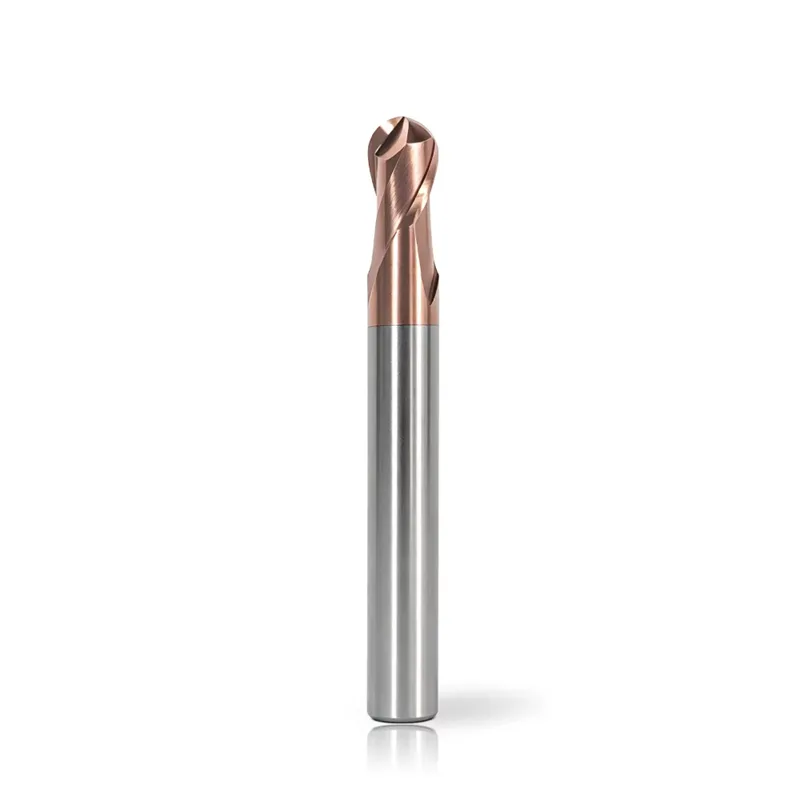
Choose the Right Long-Reach Structure
First determine what prevents a standard end mill from reaching the feature: insufficient overall length, insufficient available reach, or shank interference.
Long Shank End Mills
Additional overall length can improve access to deeper features without necessarily changing cutting length by the same amount.
Compare actual dimensions →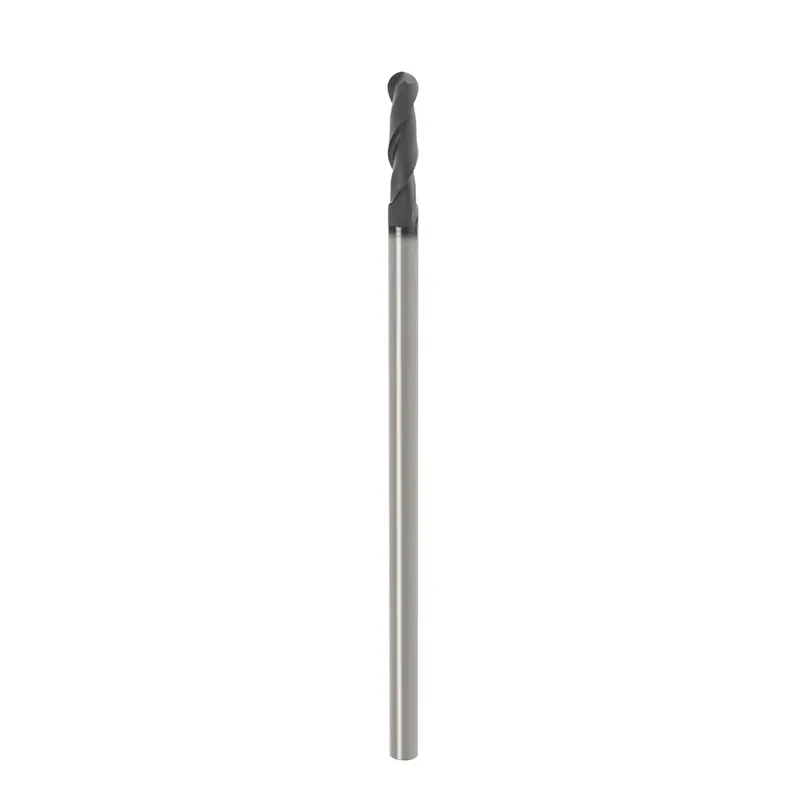
Extra-Long Shank End Mills
Select a longer overall length when required by tool access. Evaluate unsupported overhang, holder interference and chatter risk.
View X-length families →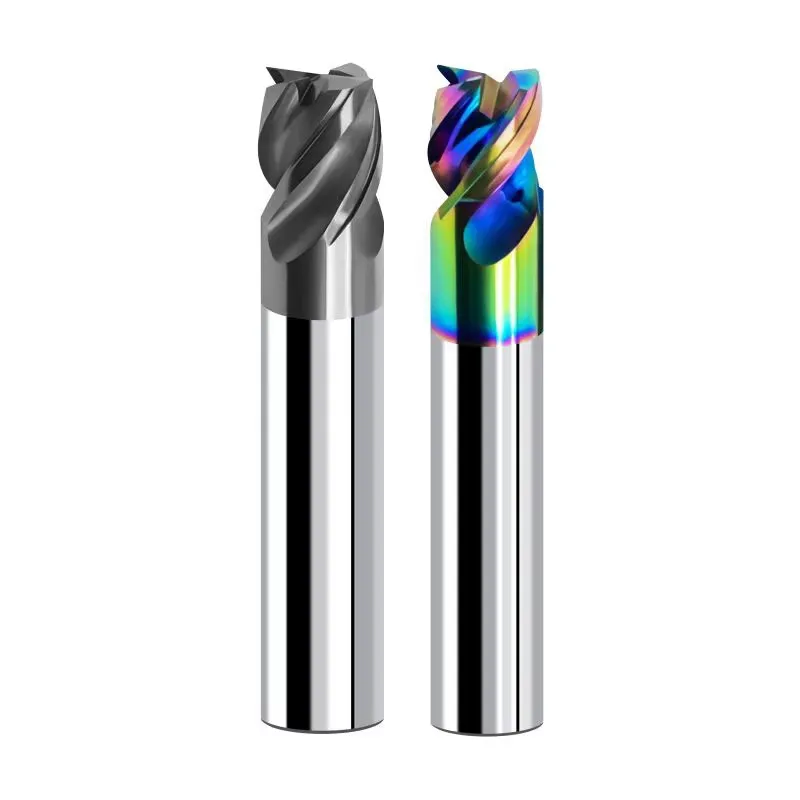
Reduced Neck / Neck Relief
A relieved neck can provide clearance beyond the cutting edge, but this structure is not listed here as a confirmed standard catalog family.
Review custom requirements →Standard Long-Shank & Extra-Long-Shank End Mill Families
Browse catalog-listed L and X length groups. Series are grouped by cutting-end geometry to make product selection faster without repeating every individual order number.
2-Flute Square
Two-flute flat-end options where a longer tool body is required; check flute length and chip removal for the cut.
4-Flute Square
Long-shank square-end choices across general steel, stainless, high-hardness and difficult-to-machine series.
2-Flute Corner Radius
Two-flute rounded-corner tools for reach-sensitive side features; verify the corner radius R for every order.
4-Flute Corner Radius
Four-flute long-shank radius tools with series-specific workpiece material selections.
2-Flute Ball Nose
Ball-nose options for 3D contouring and mold finishing at deeper features; tool overhang must be checked.
3-Flute Aluminum Square
Aluminum-oriented three-flute square-end families with catalog-listed long and extra-long shank variants.
3-Flute Aluminum U-Flute
Aluminum U-flute geometry; select shank length separately from required cutting length.
Choose by Square, Corner Radius or Ball Nose
After confirming the necessary reach, choose the cutting profile for the machined feature. Detailed flute-count and tool-geometry guidance remains on each dedicated category page.
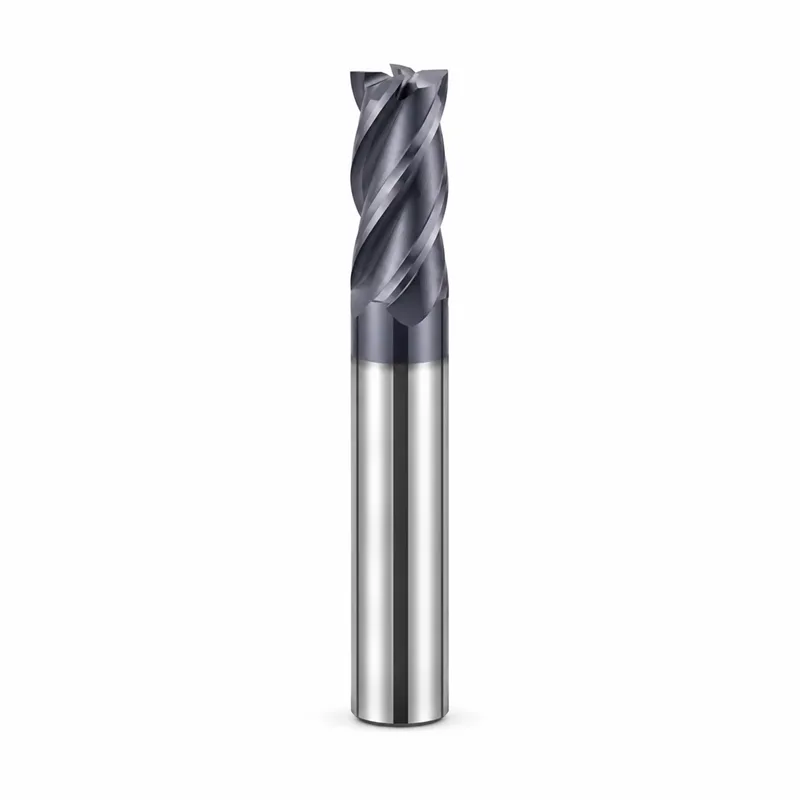
Square End Mills
For flat-bottom pockets, shoulders and accessible wall profiles; review cutting length against the required axial engagement.
View Square End Mills →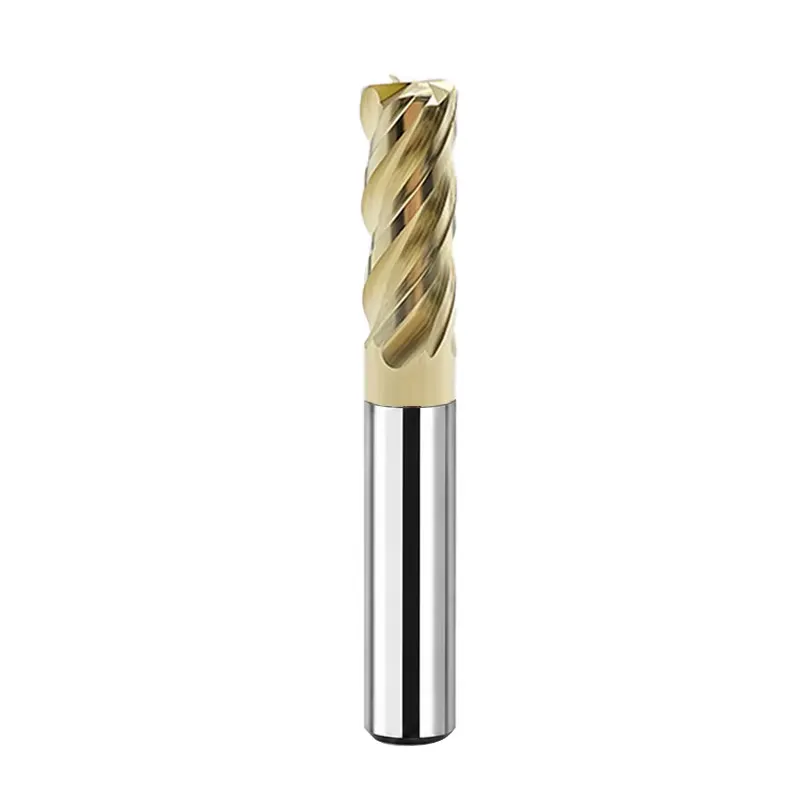
Corner Radius End Mills
For profiles that specify a corner radius R and operations where edge loading and accessibility must both be checked.
View Bull Nose End Mills →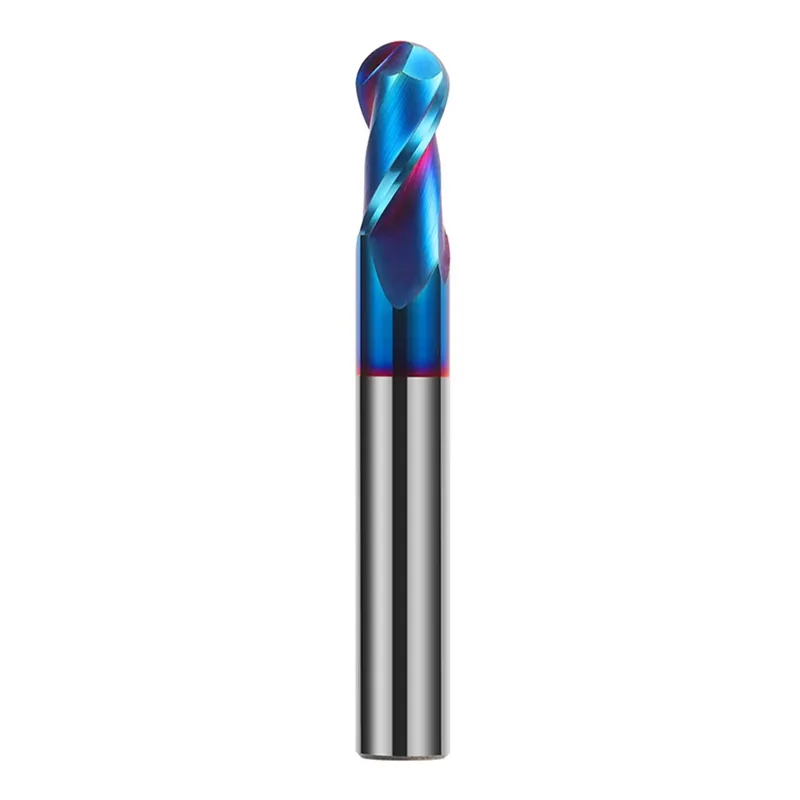
Ball Nose End Mills
For curved mold surfaces and 3D finishing where tool reach, ball-end geometry and toolpath engagement are important.
View Ball Nose End Mills →Compare Actual Cutting Length & Overall Length
These three HMQ four-flute square end mills share a 3 mm cutting diameter, but differ in cutting length H and overall length L. The figures below are taken from catalog-listed order numbers.
| Actual order number | Length type | D (mm) | d (mm) | H (mm) | L (mm) |
|---|---|---|---|---|---|
HMQ-4E-D3.0*9*d3*50L | Standard | 3 | 3 | 9 | 50 |
HMQ-4EL-D3.0*12*d3*75L | Long shank | 3 | 3 | 12 | 75 |
HMQ-4EX-D3.0*12*d3*100L | Extra-long shank | 3 | 3 | 12 | 100 |
D = cutting diameter; d = shank diameter; H = catalog cutting length; L = overall length. These examples do not establish maximum usable machining depth or a specific guaranteed reach.
Choose by Deep-Cavity Milling Operation
Deep reach alone does not determine whether a tool is appropriate. Consider the operation, engagement, accessible path and holder geometry together.
Deep Pockets & Cavities
Select the shortest feasible overall length that clears walls and fixtures. Confirm pocket depth, tool diameter, holder size and chip evacuation.
Deep Side-Wall Milling
Separate the required cutting height from the reach dimension. A long tool with a short flute cannot take an arbitrarily deep full-height side cut.
Deep 3D Mold Contouring
Ball nose and corner radius profiles can access curved mold features; evaluate contact position, overhang and finishing tolerance.
Select a Long-Reach Series by Material
Choose the material series first, then verify the matching long-shank model and size. A long length variant does not change the underlying series' material purpose.
Steel & Alloy Steel
Consider HMQ and other steel-oriented series appropriate to the actual workpiece, geometry and hardness.
Explore 4 Flute Series →Stainless Steel
Review HMP, HMM, HMT or HMV families based on material grade, cutter geometry and machining approach.
End Mills for Stainless Steel →Aluminum
HAL, HAS and HAX provide catalog aluminum square/U-flute long-shank options; confirm the exact geometry in each family.
End Mills for Aluminum →Hardened Steel
Check HMH/HMX length options and minimize unnecessary overhang for the hard-milling process; HMM is a lower-hardness option.
Hardened Steel End Mills →Titanium & High-Temperature Alloys
Review HMT and HMS length groups after establishing the alloy grade, heat control and chip-removal requirements.
Titanium & Heat-Resistant Alloys →Custom Reduced Neck & Related Tool Options
When a longer standard shank cannot clear the feature, send the cavity drawing and holder dimensions for a neck-clearance assessment.
Reduced-Neck Long-Reach Tool Requirements
A custom neck-relieved design is assessed from actual part and holder geometry. Do not assume it is a catalog standard model.
Discuss a Custom Reach Tool →- Cutting diameter D and preferred edge profile
- Required cutting length H and usable reach
- Neck diameter, neck length and wall clearance
- Workpiece material, pocket drawing and quantity
- Holder dimensions and anticipated tool protrusion
Request Long Reach End Mill Pricing & Specifications
Share the part features and required tool access so the correct long-shank, extra-long-shank or drawing-based solution can be reviewed.
- Preferred geometry and catalog family (if known)
- Workpiece material, hardness and milling operation
- Cutting diameter D, shank diameter d, cutting length H and overall length L
- Required protrusion, cavity depth, holder dimensions and potential interference
- Quantity and technical drawing, when available
Request Pricing & Specifications
Include your tool dimensions, application and quantity.