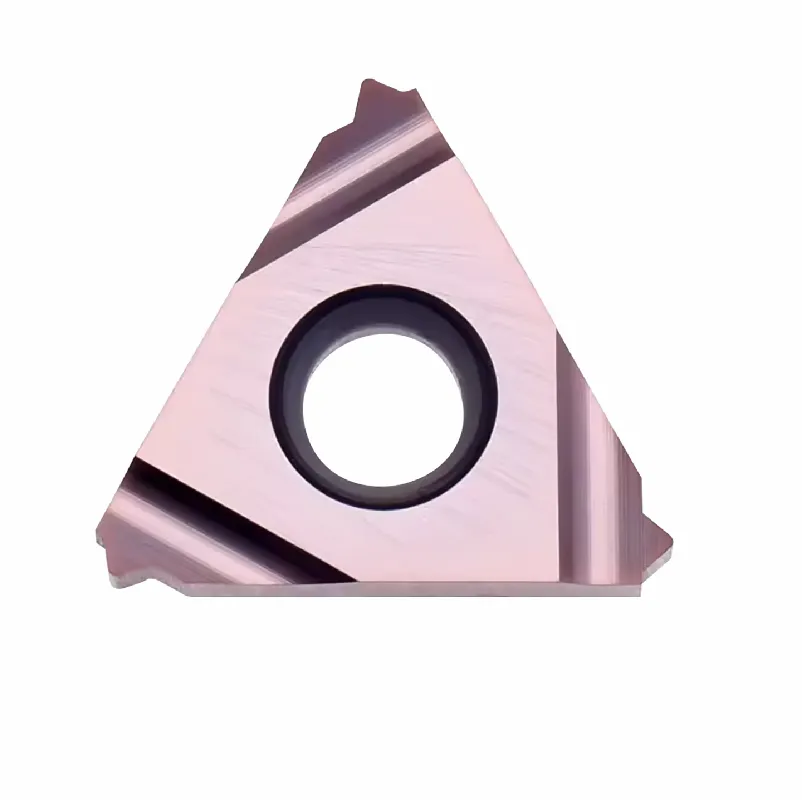
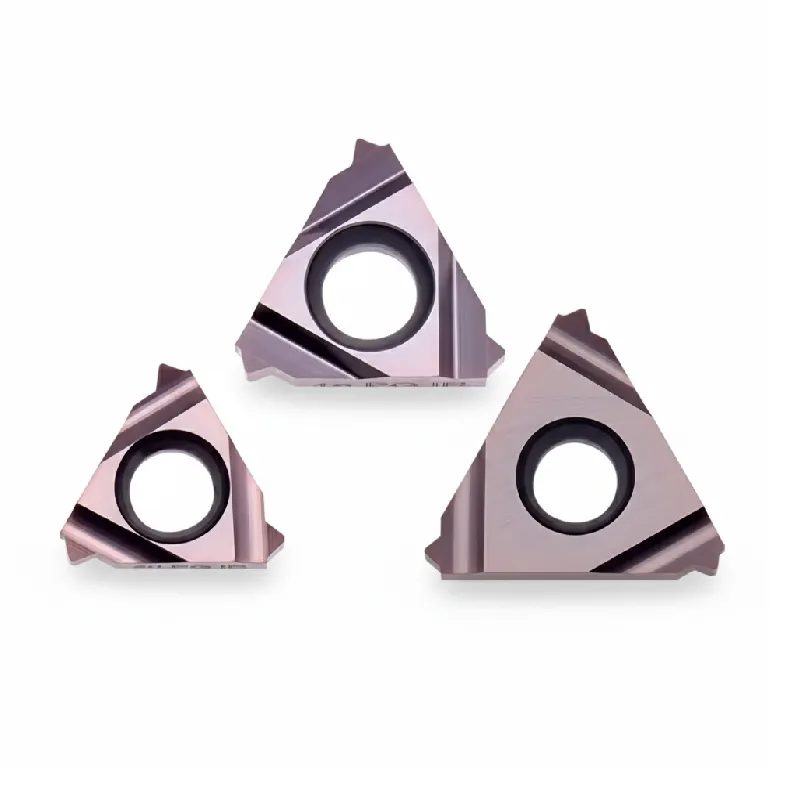
PG DIN 40430 Steel Conduit Threading Inserts
Ideal for: Electrical Conduits, Cable Glands, Junction Box Fittings.
- Product Standard: PG (Panzergewinde) DIN 40430 Full Profile laydown threading inserts.
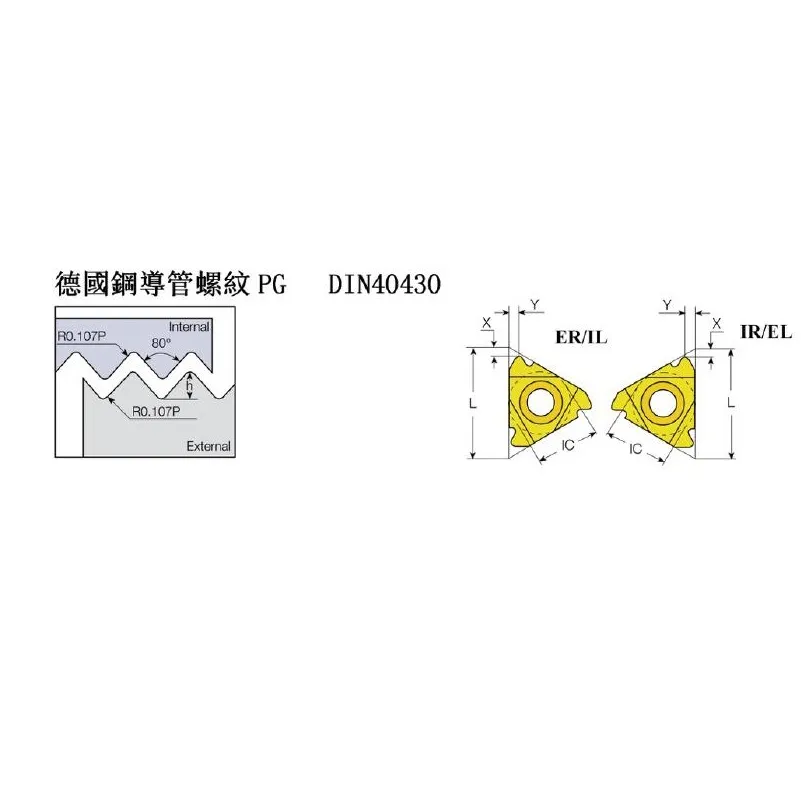
- Unique Geometry: Features the specific 80° thread angle required for German steel conduit threads.
- Full Profile Precision: Tops the crest radius (R0.107P) to ensure smooth, safe assembly of electrical fittings.
- Wide Compatibility: Covers all standard conduit sizes from small PG7 (20 TPI) up to large PG48 (16 TPI).
- Core Series: Stocked in the popular 16er threading insert (3/8″ I.C.) and precision 1/4″ (11mm) sizes.
-
Versatility: High-performance threading inserts for lathe applications, available in Right-Hand and left hand thread insert models.
Contact our sales team to discover all of your pricing options.
Product Overview
Manufacture precision electrical fittings with our PG (Panzergewinde) Full Profile laydown threading inserts. Compliant with DIN 40430 standards, these tools produce the unique 80° thread angle used extensively in electrical conduit systems, cable glands, and connectors across Europe and Asia.
Featuring a “Full Profile” geometry, these carbide threading inserts cut the shallow thread depth and finish the crest radius in a single pass. This ensures the thin-walled conduit pipes maintain their structural integrity while providing a secure, vibration-resistant connection.
Key Features & Benefits
- 80° Profile: Precision ground to the exact 80° included angle, preventing cross-threading with standard 60° fasteners.
- The 16ER Standard: Our 16er threading inserts (e.g., 16ER 18 PG) efficiently handle the most common conduit sizes (PG9 to PG16) in a single tool.
- Small Bore Capability: We offer 1/4″ (11mm) I.C. inserts for threading smaller internal glands and connectors.
-
Directional Options: To support complex manufacturing, we provide standard right-hand tools and specific left hand thread insert models (e.g., 16EL 16 PG) for special fittings.
PG DIN 40430 Insert Model
| I.C. | Pitch (TPI) | External Model | Internal Model | Application | L | X | Y |
|---|---|---|---|---|---|---|---|
| 3/16″ | 20 | 11ER20PG | 08IR20PG | PG7 | 8 | 0.9 | 0.8 |
| 1/4″ | 20 | (see above) | 11IR20PG | PG7 | 11 | 0.8 | 0.9 |
| 1/4″ | 18 | 11ER18PG | 11IR18PG | PG9/11/13.5/16 | 11 | 1 | 0.8 |
| 1/4″ | 16 | 11ER16PG | 11IR16PG | PG21/29/36/42/48 | 11 | 0.9 | 1.1 |
| 3/8″ | 20 | 16ER20PG | 16IR20PG | PG7 | 16 | 0.8 | 0.9 |
| 3/8″ | 18 | 16ER18PG | 16IR18PG | PG9/11/13.5/16 | 16 | 1 | 0.8 |
| 3/8″ | 16 | 16ER16PG | 16IR16PG | PG21/29/36/42/48 | 16 | 1.1 | 0.9 |
Need a consultation? Contact us!
Contact our sales team to discover all of your pricing options