스레드 유형 종합 분류 및 선택 가이드
나사산(나사산 또는 패스너 나사산이라고도 함)은 회전 운동을 직선 운동 또는 힘으로 변환하는 원통형 표면의 나선형 융기입니다. 나사산은 패스너(볼트, 나사, 너트), 동력 전달(리드스크류, 잭), 파이프 씰링 및 정밀 메커니즘에 필수적입니다.
1. 주요 용어
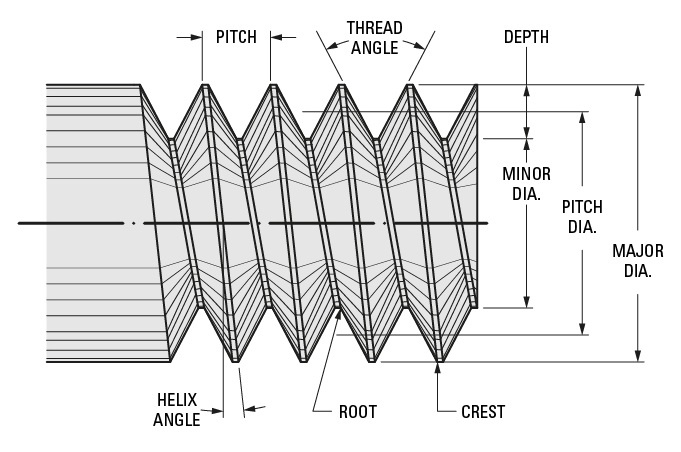
스레드를 분류하기 전에 지오메트리에 대한 이해가 필수적입니다:
- 주요 직경: 가장 큰 직경(외부 스레드에는 볏, 내부 스레드에는 뿌리).
- 작은 지름: 가장 작은 지름 (외부에 뿌리, 내부에 볏).
- 피치 직경: 스레드 폭이 홈 폭과 같은 이론적 직경입니다.
- 피치: 인접한 스레드 크레스트 사이의 축 방향 거리(미터법에서는 mm, 영국식에서는 인치당 스레드 수/TPI).
- Lead: 회전당 축 방향 전진(단일 시작 스레드의 피치와 같음).
- 측면 각도: 스레드 측면과 축이 수직인 각도(예: 대부분의 V-스레드의 경우 60°).
- 문장/뿌리: 외부/내부 부품 스레드 프로파일.
- 수작업: 오른손(RH, 표준, 시계 방향으로 조임) 또는 왼손(LH).
- 테이퍼: 평행(직선) 또는 테이퍼형(밀봉용 원뿔형).

2. 종합 분류
기능별
- 고정/마운팅 스레드: 부품(볼트, 나사, 너트) 결합용. 가장 일반적인 삼각형/V-프로파일.
- 전력/전송 스레드: 토크를 선형 힘/운동(리드스크류, 바이스, 잭)으로 변환합니다. 사다리꼴, 정사각형 또는 버트리스 프로파일.
- 파이프/씰링 스레드: 유체/가스 연결용. 간섭 씰을 위해 테이퍼가 가늘어지는 경우가 많습니다.
- 특수 스레드: 목재 나사, 셀프 태핑, 너클(내구성을 위해 둥글게 처리), 멀티 스타트(빠른 전진).
스레드 형태/프로파일별(단면)
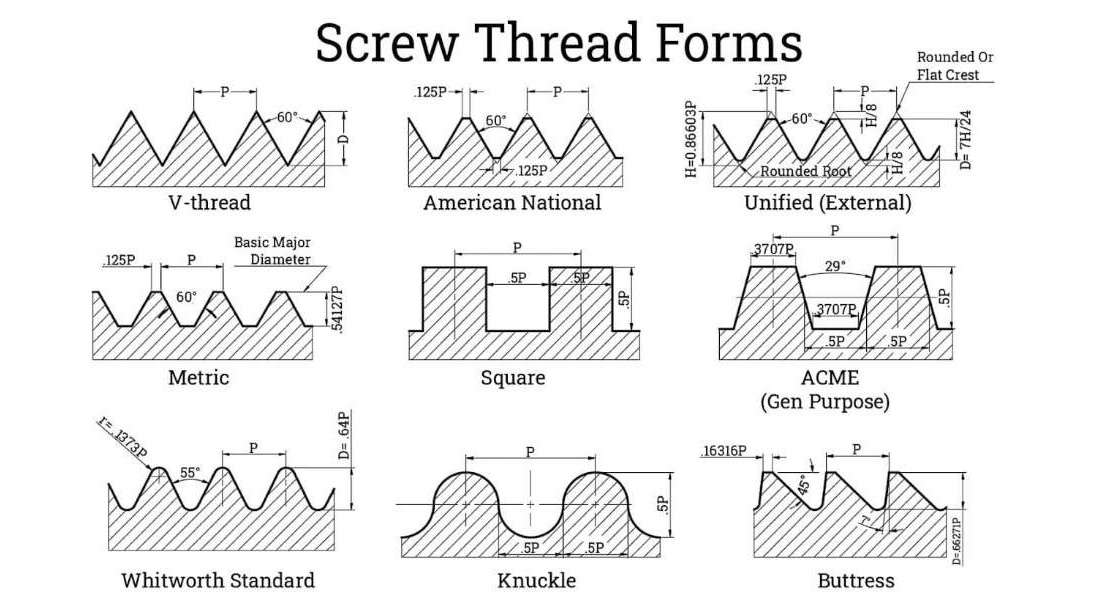
- 삼각형/V-스레드 (60° 또는 55° 측면 각도): 고정에 가장 일반적으로 사용됩니다. 샤프-V, 절단(실용), ISO 미터법, 유니파이드, 휘트워스 포함. 장력은 강하지만 마찰력이 높습니다.
- 정사각형 스레드: 정사각형 프로파일; 전력 전송 시 마찰이 가장 적고 효율이 가장 높음. 제조가 어렵고 비용이 많이 들며 뿌리가 약합니다.
- 아크메/사다리꼴 스레드 (29°-30° 측면 각도): 평평한 크레스트/뿌리; 정사각형보다 가공하기 쉽습니다. 파워 스크류에 적합하며 효율성과 강도가 균형을 이룹니다.
- 버트리스 스레드 (비대칭, 한쪽이 45°인 경우가 많음): 한 방향으로 높은 하중 용량, 정사각형처럼 효율적이지만 전단력이 더 강합니다. 프레스/바이스에 사용됩니다.
- 원형/너클 스레드: 둥근 프로파일, 먼지/부식에 강함. 열악한 환경(예: 철도, 커플링)에서 사용.
- 기타: 웜(헬리컬 기어형), 톱니형 변형.
표준화 시스템 및 측정 기준
- ISO 미터법(M): 글로벌 표준(60° V-프로파일). 거친 피치(기본값) 또는 미세 피치. 지정: M10×1.5(직경 × 피치). 표준: ISO 261/724.
- 통합 스레드 표준(UTS - 인치): 미국/캐나다 우세(60°). UNC(굵은), UNF(가는), UNEF(초미세), UNS(특수). 예: 1/2-13 UNC(직경-TPI). 표준: ANSI/ASME B1.1.
- 휘트워스(영국): 55° 둥근. BSW(굵은), BSF(가는), BSP(파이프). 역사적으로 오래되었지만 여전히 영국/영연방에서 사용됩니다.
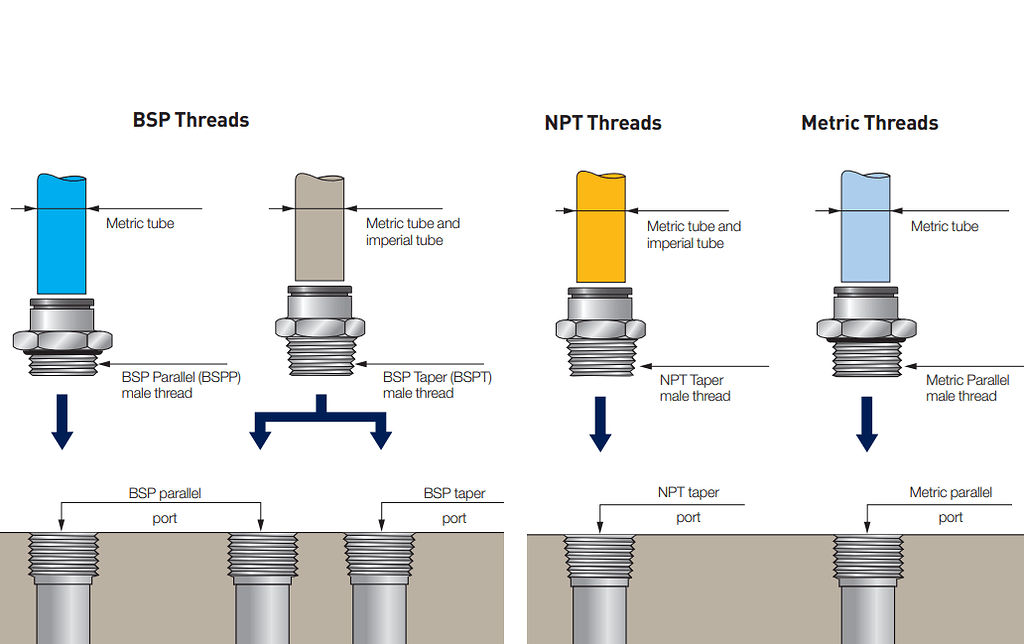
- 파이프 스레드:
- NPT/NPTF(미국 테이퍼형, 60°, 테이프로 자체 밀봉).
- BSPP/G(병렬, 55°, 와셔/실런트 필요).
- BSPT/R(테이퍼형, 55°).
- 전력/전송 시리즈: 사다리꼴(Tr/DIN 103), 아크메(ASME), 정사각형, 버트리스.
- 기타: PG(도관), BA(소형 기기), UNJ/MJ(루트 반경이 있는 항공우주).
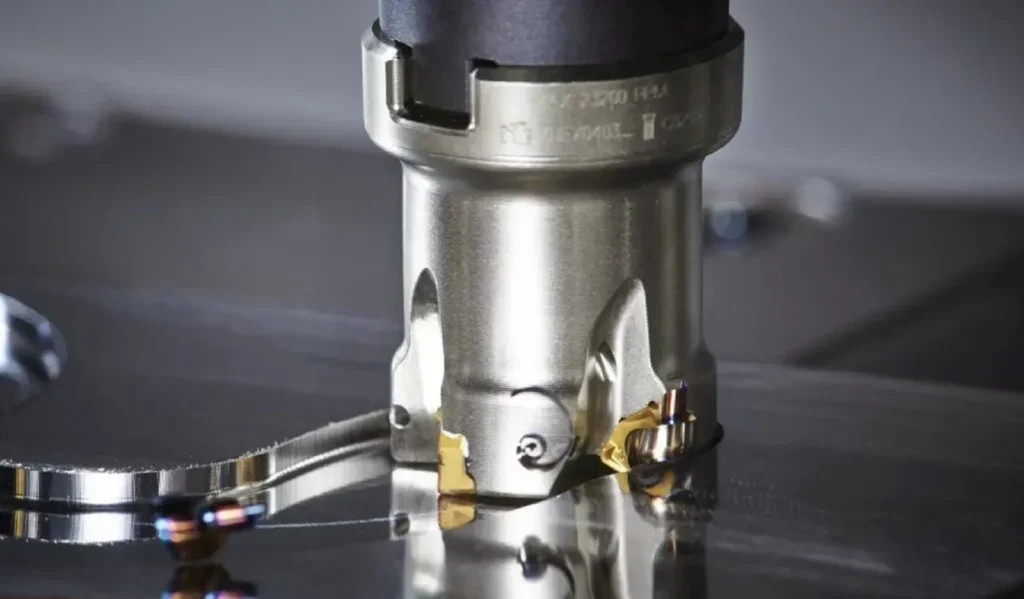
선택 시 스레드 터닝 도구, 에서 다양한 제품군을 선택할 수 있습니다.
피치 시리즈별
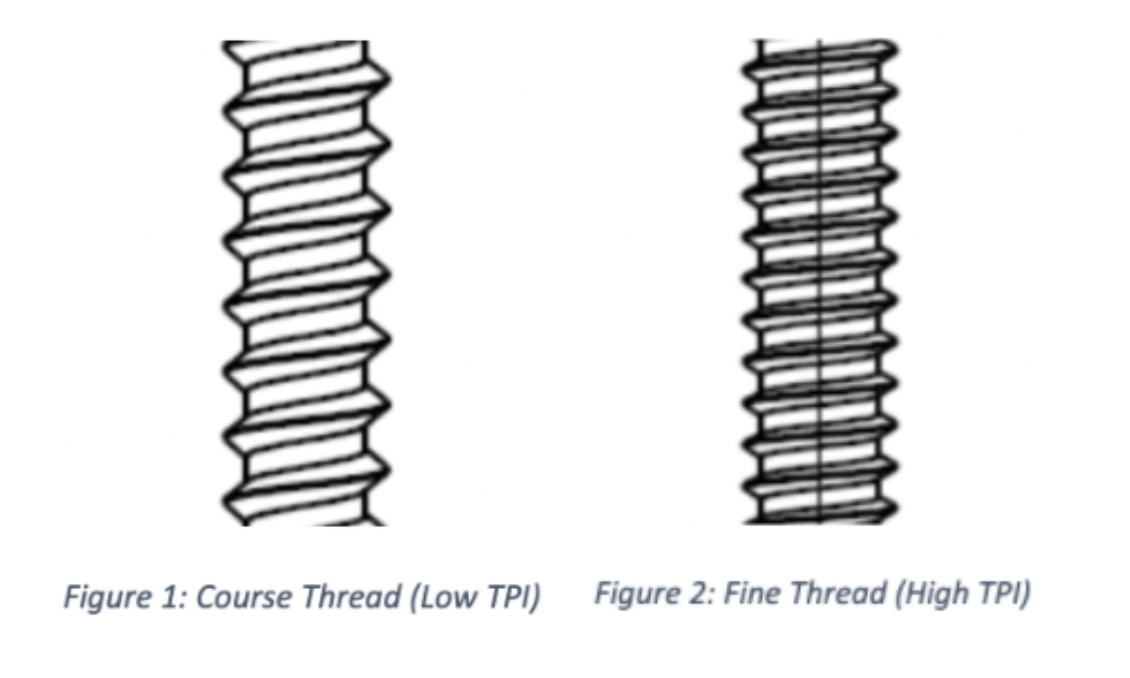
- 거친: 더 큰 피치/더 적은 TPI. 더 빠른 조립, 더 나은 박리 저항, 부서지기 쉬운 재료 또는 도금에서 더 용이합니다.
- 벌금/추가 벌금: 더 작은 피치/더 많은 TPI. 더 높은 인장 강도, 더 나은 진동 저항, 더 미세한 조정, 얇은 벽에 더 강합니다.
기타 기준
- 수작업: RH(기본값) 대 LH(회전 어셈블리에서 풀림 방지).
- 시작: 단일(표준) 대 다중 시작(더 빠른 선형 진행, 더 낮은 자동 잠금).
- 테이퍼 대 병렬: 밀봉용 테이퍼, 일반용 평행.
- 허용 오차/맞춤 클래스 (통합): 1A/1B(느슨함), 2A/2B(범용, ~90% 사용), 3A/3B(정밀도/긴밀함). 미터법은 허용 오차 등급을 사용합니다(예: 6g/6H).
3. 스레드 맞춤, 강도 및 제조
- 핏 클래스: 간극/견고성 제어. 2A/2B는 조립과 강도의 균형을 맞추고, 3A/3B는 중요한 애플리케이션에 적합합니다. 도금을 위해 종종 추가되는 허용치.
- 힘: 나사산이 벗겨지기 전에 볼트의 장력이 떨어져야 합니다. 결합 길이 ~ 직경의 1배(강철). 절단된 나사보다 말린 나사(더 강하고 매끄러운)를 선호합니다.
- 제조: 절단 대 롤링, 비용과 피로 수명에 영향을 미칩니다.
4. 선택 가이드
이러한 단계별 요소에 따라 선택하세요:
지역/호환성 - 전 세계 미터법(M)(미국/영국 레거시 제외). 북미의 통합(UNC/UNF). 영국/영연방의 Whitworth/BSP. 비호환성을 피하기 위해 짝을 이루는 부품을 일치시킵니다.
1차 지원:
- 일반 고정: ISO 미터법 거친 또는 UNC. 진동, 얇은 재료 또는 정밀도에는 미세(MF/UNF)를 사용합니다.
- 파이프/씰링: NPT(미국, 테이퍼형, 실란트 옵션, NPTF 포함). BSPT(테이퍼형, 유럽/아시아). BSPP(병렬 + O링/와셔). 혼합하지 마세요.
- 동력 전달/이동(클램프, 리드스크류, 바이스):
| 스레드 유형 | 효율성 | 강도/전단 | 제조 가능성 | 최적의 | 단점 |
|---|---|---|---|---|---|
| 표준(UNC/UNF) | Medium | 높음(샤프트) | 우수 | 일반 클램프 | 느린 작동 |
| 사다리꼴/사다리꼴 | 높음 | Good | Good | 바이스, 액추에이터 | 적당한 비용 |
| 스퀘어 | 최고 | 하위 루트 | Poor | 정밀 리드 스크류 | 기계 가공이 어렵습니다. |
| Buttress | 높음 | 최고(편도) | Good | 단방향 프레스 | 단방향 전용 |
부하, 진동 및 환경:
- 높은 진동: 미세한 나사산 또는 잠금 기능.
- 무거운/단방향 하중: 버트리스.
- 고효율/저마찰: 정사각형 또는 다중 시작.
- 거칠다/더럽다: 너클/원형.
- 자동 잠금이 필요합니다: 거친 또는 표준 V(다중 시작 방지).
조립 및 성능:
- 속도/편리함: 거친 스레드(회전 횟수 감소).
- 강도 / 프리로드: 가는 실.
- 얇은 벽/취성 재료: 거친.
- 도금/코팅: 추가 여유 공간 허용(클래스 2A).
기타 고려 사항:
- 비용: 표준 V-스레드가 가장 저렴합니다.
- 손잡이: LH: 특정 풀림 방지용(예: 자전거 페달, 가스통).
- 멀티 스타트: 마찰을 줄이면서 더 빠르게 이동할 수 있습니다.
- 안전/중요: 3A/3B 핏, UNJ/MJ 프로파일, 검증된 결합을 사용합니다.
- 식별 팁: 주요 직경 + 피치/TPI + 측면 각도(60° 대 55°)를 측정합니다. 나사 게이지 또는 캘리퍼를 사용하세요.
예제:
- 일반 볼트(유럽): M8×1.25(굵은 미터법).
- 미국 패스너: 3/8-16 UNC.
- 파이프(미국): 1/2 NPT.
- 리드스크류: Tr20×4(사다리꼴) 또는 1″-5 Acme.
실용적인 팁: 항상 외부/내부 스레드와 표준을 일치시키세요. 새로운 디자인의 경우 전 세계적으로 사용 가능한 미터법 ISO를 선호하세요. 정확한 치수/공차는 ASME B1.1 / ISO 261 표를 참조하세요. 진동에 대비해 나사산 잠금 화합물이나 와셔를 사용하세요. 확실하지 않은 경우 Go/No-Go 게이지로 테스트 핏을 확인합니다.
이 분류 및 가이드는 대부분의 산업, 자동차, 배관 및 기계 분야에 적용됩니다. 특수 항공우주, 목재 또는 플라스틱 스레드의 경우 추가 표준(예: UNJ, 셀프 태핑)이 적용됩니다.