Plaquettes de fraisage d'épaulement
Plaquettes en carbure pour le fraisage CNC d'épaulements carrés, y compris les épaulements à 90°, le fraisage en gradins et les opérations compatibles de fraisage latéral, de rainurage et de fraisage en rampe. Choisissez la plaquette adaptée à votre fraise à épaulement, à la profondeur de coupe requise, au rayon d'angle et au matériau de la pièce.
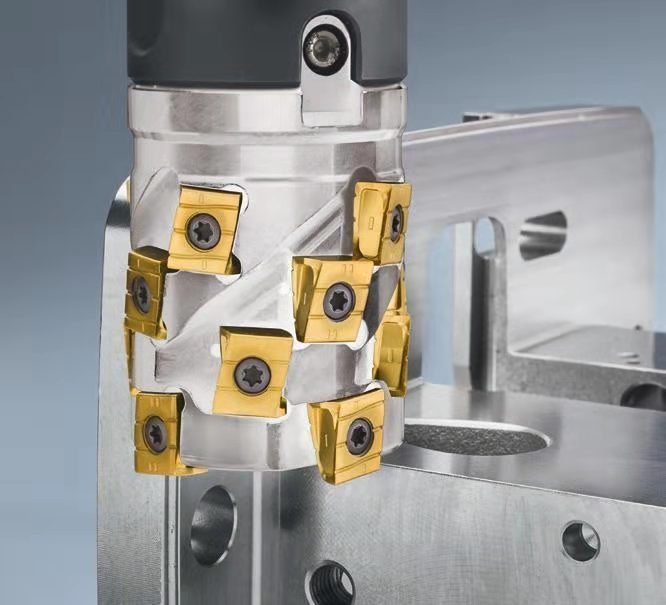
Gammes de plaquettes de fraisage d'épaulement
Choisissez la gamme qui correspond à votre système de coupe actuel, ou comparez les plateformes disponibles avant de vérifier la référence complète de la plaquette.
Choisissez en fonction de vos besoins en matière de fraisage d'épaulement
Le fraisage d'épaulement permet d'obtenir une paroi verticale et un fond horizontal en une seule opération. Choisissez le système de plaquettes en fonction de la précision requise pour l'épaulement, de la profondeur de coupe et de la méthode d'usinage souhaitée.
Véritable articulation à 90°
Pour le fraisage d'épaulements carrés nécessitant un angle d'entrée de 90°, une grande précision des parois et une transition nette entre la paroi et le fond.
Fraisage en profondeur et par étapes
Pour le fraisage en profondeur dans les épaulements et les passes répétées en descente progressive, vérifiez la longueur de l'arête de coupe de la plaquette et la profondeur de coupe maximale (APMX) du système de fraisage.
Fraisage de rainures et de bords
Certains systèmes de fraisage d'épaulement permettent également d'effectuer des opérations de fraisage latéral et de rainurage. Vérifiez au préalable la largeur de la fraise, la configuration de la poche et la compatibilité des plaquettes.
Montée progressive et entrée en poche
Les capacités de rampage, d'entrée hélicoïdale et de poche dépendent de la géométrie de la fraise et du système de plaquettes ; veillez donc à vérifier les caractéristiques techniques de la fraise avant utilisation.
Vérifiez la compatibilité de l'insert avec votre système de fraisage
Un code de plaquette complet ou un modèle de fraise constitue le moyen le plus rapide de vérifier la compatibilité avec la poche, la profondeur de coupe admissible, la géométrie des angles et la famille de plaquettes appropriée.
Insérer le code
Veuillez indiquer la référence complète de la plaquette, y compris la taille, le brise-copeaux, le rayon d'angle et la nuance, dans la mesure du possible.
Corps de coupe / Série
Veuillez nous fournir le modèle de fraise à épaulement ou de fraise à épaulement carré, son diamètre, le système de poche ou un échantillon de plaquette existant afin que nous puissions vérifier la compatibilité.
Profondeur de coupe maximale
Vérifiez la profondeur d'épaulement requise ou l'APMX afin de pouvoir adapter correctement la longueur du bord de l'insert et le système de coupe.
Rayon de l'angle
Précisez le rayon de courbure requis et l'état du sol, en particulier lorsque la géométrie de la jonction entre le mur et le sol est importante.
Choisir la direction de l'alésage en fonction du matériau de la pièce
Utilisez le matériau de la pièce pour affiner le choix de la qualité, puis confirmez la qualité et la géométrie exactes pour la famille de plaquettes sélectionnée. En cas de fraisage d'épaulement interrompu ou de configurations instables, précisez les conditions de coupe lors de l'examen de la demande de devis.
Acier
Pour le fraisage d'épaulement de l'acier au carbone, de l'acier allié et de l'acier en général, y compris les applications d'ébauche où la stabilité des arêtes et un enlèvement de matière productif sont essentiels.
Acier inoxydable
Pour l'acier inoxydable et les matériaux plus résistants, où la chaleur, l'évacuation des copeaux et la résistance des arêtes exigent une nuance et une géométrie mieux adaptées.
Fonte
Pour les applications sur fonte où la résistance à l'abrasion, l'uniformité des arêtes et la formation stable des épaulements constituent les principales priorités.
Aluminium et métaux non ferreux
Pour certaines familles de plaquettes dotées d'une géométrie de coupe tranchante et de nuances adaptées à l'aluminium, au cuivre et à d'autres matériaux non ferreux.
La disponibilité des nuances et des formes géométriques varie selon la gamme d'inserts et la référence complète. Vérifiez l'option exacte sur la page du produit ou lors de l'examen de la demande de devis.
Besoin d'aide pour choisir une plaquette de fraisage d'épaulement ?
Veuillez nous communiquer le code de votre plaquette, le modèle de fraise, la profondeur d'épaulement requise, le rayon d'angle, le matériau de la pièce à usiner, les conditions d'usinage et la quantité afin que nous puissions vérifier la compatibilité et la nuance appropriée.